Machined metal vent plug for equipment covers, gearboxes and reservoirs where a plastic body is not acceptable — higher temperature, higher torque, or a metal finish requirement. Supplied with a bonded sealing washer.
Published figures for the SV-M. Thread size and washer grade are the two variables; everything else follows from them.
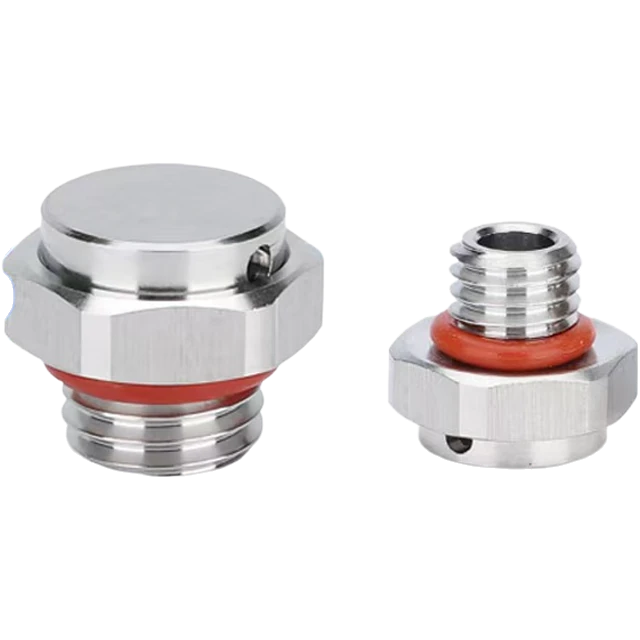
| Property | Value |
|---|---|
| Part number | SV-M |
| Type | Vented screw / machined metal breather plug |
| Material | SS304 or nickel-plated brass |
| Thread | M5×0.8 as standard; other metric sizes on request |
| Sealing | Bonded sealing washer |
| Membrane | Laminated ePTFE |
| Head | Driver slot or hex, cut to the size ordered |
| IP rating | IP68 — as stated by the body maker. No third-party report on the finished assembly is held, and none is claimed. |
| Operating temperature | Data on request — depends on the washer grade |
| Airflow | Data on request — measured per size at a stated test pressure |
| Unit weight | Data on request |
| MOQ, lead time, sample policy | See contact |
The head takes a driver and sits flush or near-flush with the cover. That matters on a machined gearbox cover or a painted panel, where a knurled plastic head reads as a repair. It also means the part can be torqued to a metal value instead of a plastic one.
A loose sealing washer falls off during assembly and is found on the floor at the end of the shift, or worse, is left out and the enclosure leaks. On the SV-M the washer is bonded to the body, so the part arrives as one piece and goes in as one piece.
SS304 where the cover is stainless or the site is wet. Nickel-plated brass where the cover is plated or painted steel and the fitting should match, and where machinability matters more than the last increment of corrosion resistance. Both carry the same membrane.
Two failure modes send people to metal: sustained torque at temperature, where nylon creeps and the seal relaxes, and solvent or fuel exposure, where nylon swells. If neither applies, the PV-M does the same job for less.
Three places a plastic vent plug does not survive.
A breather releases the pressure that heat and churning build inside a gear case. A metal body takes the torque and the oil mist without softening.
Where the fitting has to survive the same coating line, or the same wash, as the tank it sits on.
A flush metal head on a painted or plated cover, instead of a plastic knob that reads as an afterthought on an otherwise finished machine.
The same function in PA66, M5 to M40, for cabinets and housings where plastic is enough.
Thread lengths, panel ranges and the airflow calculator for sealed cabinets.
What the laminated ePTFE membrane does, how it is bonded, and what it will not stop.